10T/H Feed Mill Layout Design & Process Flow Guide
Complete Guide to Feed Plant Design, Equipment Layout and Production Process
When building a 10 tons per hour (10T/H) animal feed production plant, layout design is one of the most important factors affecting:
- Production efficiency
- Operating cost
- Labor utilization
- Equipment maintenance
- Future expansion
A well-designed feed mill can improve material flow, reduce energy consumption, and ensure stable production.
This guide provides a complete overview of:
- Feed mill layout design
- Feed production process
- Equipment arrangement
- Flow diagram
- Design considerations
1. What is a 10T/H Feed Production Line?
A 10T/H feed plant is a medium-to-large scale feed production system commonly used for:
- Poultry feed production
- Cattle feed production
- Sheep and goat feed
- Livestock feed manufacturing
Typical Production Capacity
| Item | Output |
| Hourly Capacity | 10 tons/hour |
| Daily Capacity | 80 tons/day |
| Monthly Capacity | ~2,400 tons/month |
This capacity is suitable for:
- Commercial feed factories
- Large farms
- Regional feed supply markets
2. Feed Mill Production Process
Standard Feed Production Flow
1. Raw Material Receiving
Corn, soybean meal, wheat, and other raw materials are delivered and stored.
2. Cleaning & Screening
Impurities are removed to:
- Protect equipment
- Improve feed quality
- Reduce equipment wear
Main equipment:
- Vibrating cleaner
- Magnetic separator
- Destoner
3. Grinding (Hammer Mill)
Raw materials are crushed into fine powder to improve:
- Mixing uniformity
- Pellet quality
- Animal digestion
4. Automatic Batching System
Different ingredients are automatically weighed according to feed formulation.
Benefits:
- Accurate dosing
- Stable nutrition
- Reduced manual labor
5. Mixing
All ingredients are mixed evenly to ensure nutritional consistency.
Common equipment:
- Double shaft paddle mixer
- Ribbon mixer
6. Pelletizing
Feed powder is compressed into pellets using a pellet mill.
Benefits:
- Better feed conversion
- Reduced feed waste
- Easier transportation
7. Cooling
Hot pellets are cooled to:
- Reduce moisture
- Improve pellet hardness
- Increase storage stability
Main equipment:
- Counterflow cooler
8. Screening
Broken pellets and powder are removed.
Benefits:
- Better pellet quality
- Improved product appearance
9. Packaging & Storage
Finished feed is automatically packed and stored for transportation.
Common packing sizes:
- 25kg
- 50kg
3. Feed Mill Flow Diagram
Simplified Process Flow
Raw Material Intake
↓
Cleaning & Screening
↓
Grinding (Hammer Mill)
↓
Automatic Batching
↓
Mixing
↓
Pelletizing
↓
Cooling
↓
Screening
↓
Packaging & Storage
This linear process ensures:
- Smooth material flow
- Low material loss
- High production efficiency
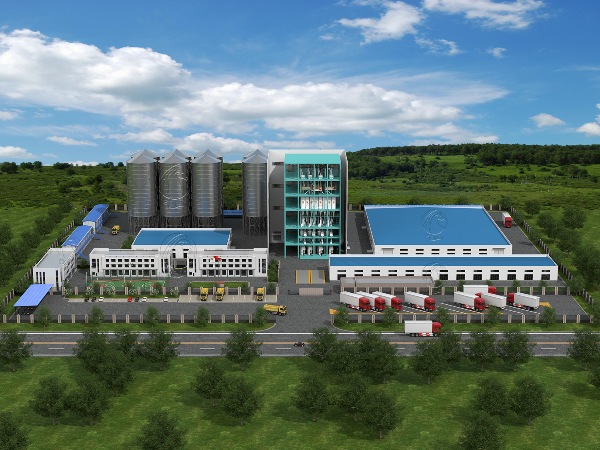
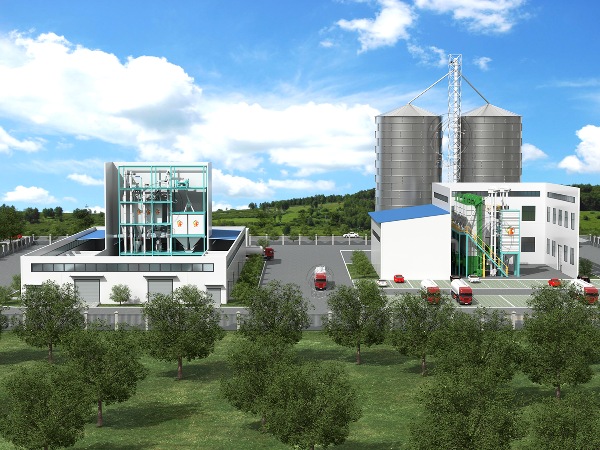
4. 10T/H Feed Mill Layout Design
Main Functional Areas
Raw Material Storage Area
Includes:
- Steel silos
- Raw material warehouse
- Truck unloading system
Usually located at the front of the factory.
Grinding Section
Includes:
- Hammer mill
- Cyclone
- Dust collector
Located close to storage area to reduce conveying distance.
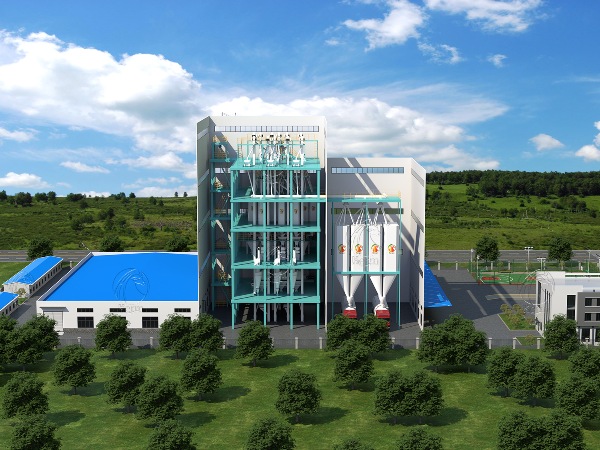
Batching & Mixing Tower
Includes:
- Automatic batching system
- Feed mixer
- Material bins
Usually installed in the central tower structure.
Pelletizing Section
Includes:
- Pellet machine
- Steam conditioning system
This is the core production area of the plant.
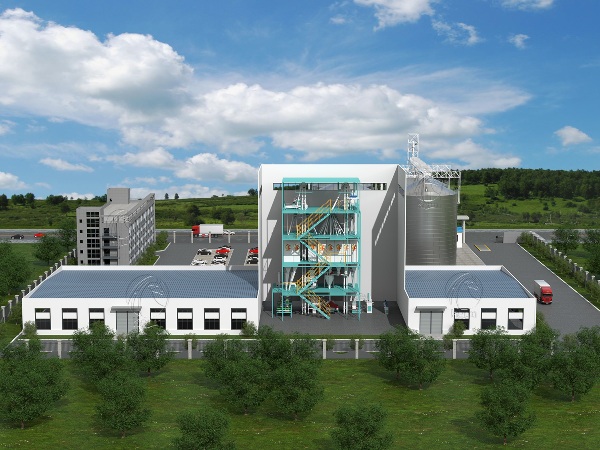
Cooling & Screening Area
Includes:
- Counterflow cooler
- Vibrating screener
Usually arranged vertically after pelletizing.
Packing Section
Includes:
- Automatic bagging machine
- Conveyor system
- Sewing machine
Located near warehouse and truck loading area.
Finished Product Warehouse
Used for:
- Feed storage
- Truck loading
- Distribution
5. Feed Mill Layout Types
Vertical Tower Design
Advantages:
- Small footprint
- Gravity flow
- Lower energy consumption
- High efficiency
Recommended for:
- 10T/H feed mills
Horizontal Layout Design
Advantages:
- Lower building investment
- Easier maintenance
Disadvantages:
- Larger land requirement
- Higher conveying cost
Recommended Design Solution
For 10T/H feed plants:
Vertical + partial horizontal layout is the most efficient solution.
6. Important Design Considerations
Material Flow Efficiency
Avoid material backflow and cross-contamination.
Dust Control
Install dust collection systems in:
- Grinding section
- Mixing section
Automation Level
PLC automation systems help:
- Improve accuracy
- Reduce labor cost
- Improve efficiency
Future Expansion
Reserve enough space for future production line expansion.
Energy Saving
Optimize equipment arrangement to reduce power consumption.
7. Typical Equipment List
Common equipment includes:
- Hammer mill (30–75kW)
- Feed mixer
- Pellet mill (90–160kW)
- Counterflow cooler
- Vibrating screener
- Automatic packing machine
8. Common Design Mistakes
Avoid:
- Poor material flow
- Insufficient storage
- Low automation
- No expansion space
These problems may cause:
- Production bottlenecks
- High labor cost
- Reduced efficiency
9. Why Professional Feed Mill Design Matters
A professional feed mill layout can:
- Increase efficiency by 10%–20%
- Reduce operating cost
- Improve feed quality
- Shorten ROI period
Conclusion
A well-designed 10T/H feed mill layout is essential for building a successful feed production business.
By optimizing:
- Process flow
- Equipment arrangement
- Plant structure
investors can achieve:
- Higher efficiency
- Lower operating cost
- Stable production
- Better profitability
CTA – Get Your Customized Feed Mill Design
If you are planning to build a 10T/H feed production plant, professional layout design and equipment selection are critical.
Henan Herm Machinery Co., Ltd provides:
- Customized feed mill layout design
- Complete feed production lines
- Turnkey feed mill solutions
- Installation & commissioning
- Technical training
Contact us today to get your customized feed mill layout and quotation.